
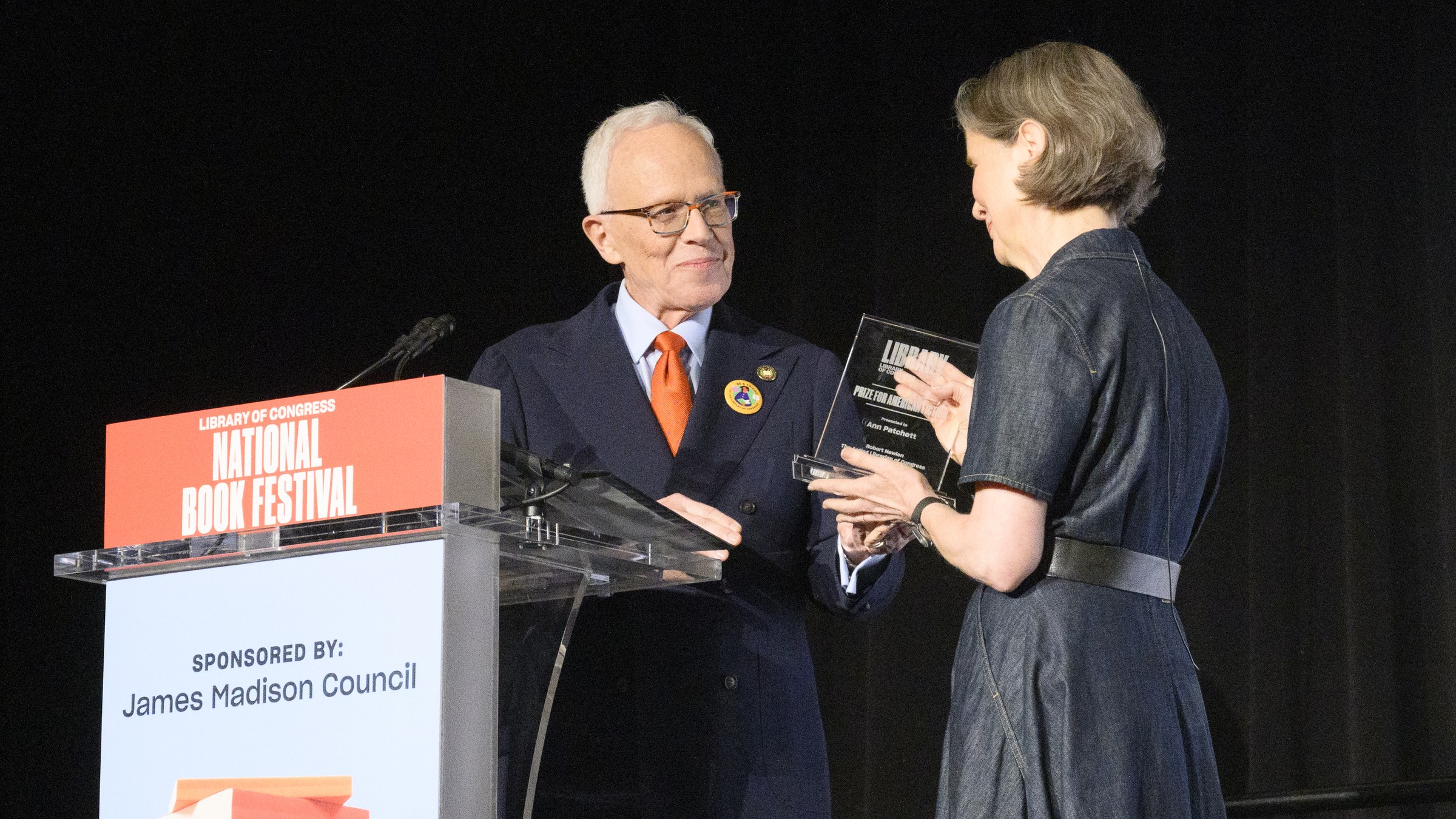
Lifetime achievement awards are a tricky business for anyone still in the middle of a career, and Ann Patchett said as much. “I feel like I’m too young for lifetime achievement,” she told a standing-room-only crowd of more than 1,100 at the Library of Congress National Book Festival in Washington on Saturday. The hall laughed, and she took the prize anyway.
The 2026 Library of Congress Prize for American Fiction was handed over on stage at the Walter E. Washington Convention Center by Robert R. Newlen, the acting Librarian of Congress. The Library has given the prize every year since 2008, and the list of past winners is a rather grand one: E. L. Doctorow, Toni Morrison, Philip Roth, Louise Erdrich and George Saunders among them. Last year it went to Geraldine Brooks, who happens to be one of Patchett’s close friends. Patchett, who is 62, joked that the honor might be “the nail in the coffin.”
Novels, nonfiction and a bookshop
Born in Los Angeles and long settled in Nashville, Patchett has written ten novels, five books of nonfiction and three for children. Among the novels are The Patron Saint of Liars, Taft, Bel Canto, Commonwealth and The Dutch House, which was a Pulitzer finalist. Her shelf of honors includes the PEN/Faulkner Award, the Women’s Prize and the National Humanities Medal, and her books have been translated into more than 30 languages. Newlen called her novels “moving, probing, tender.”
She is also, unusually for a writer of her standing, a shopkeeper. Patchett opened Parnassus Books in Nashville nearly 15 years ago, and through the Parnassus Books Foundation she gives books to children in Title I schools. Her own thanks were addressed, fittingly, to the librarians, whom she called “the very noblest of people.”
“I feel like I’m too young for lifetime achievement”
The book that did not work
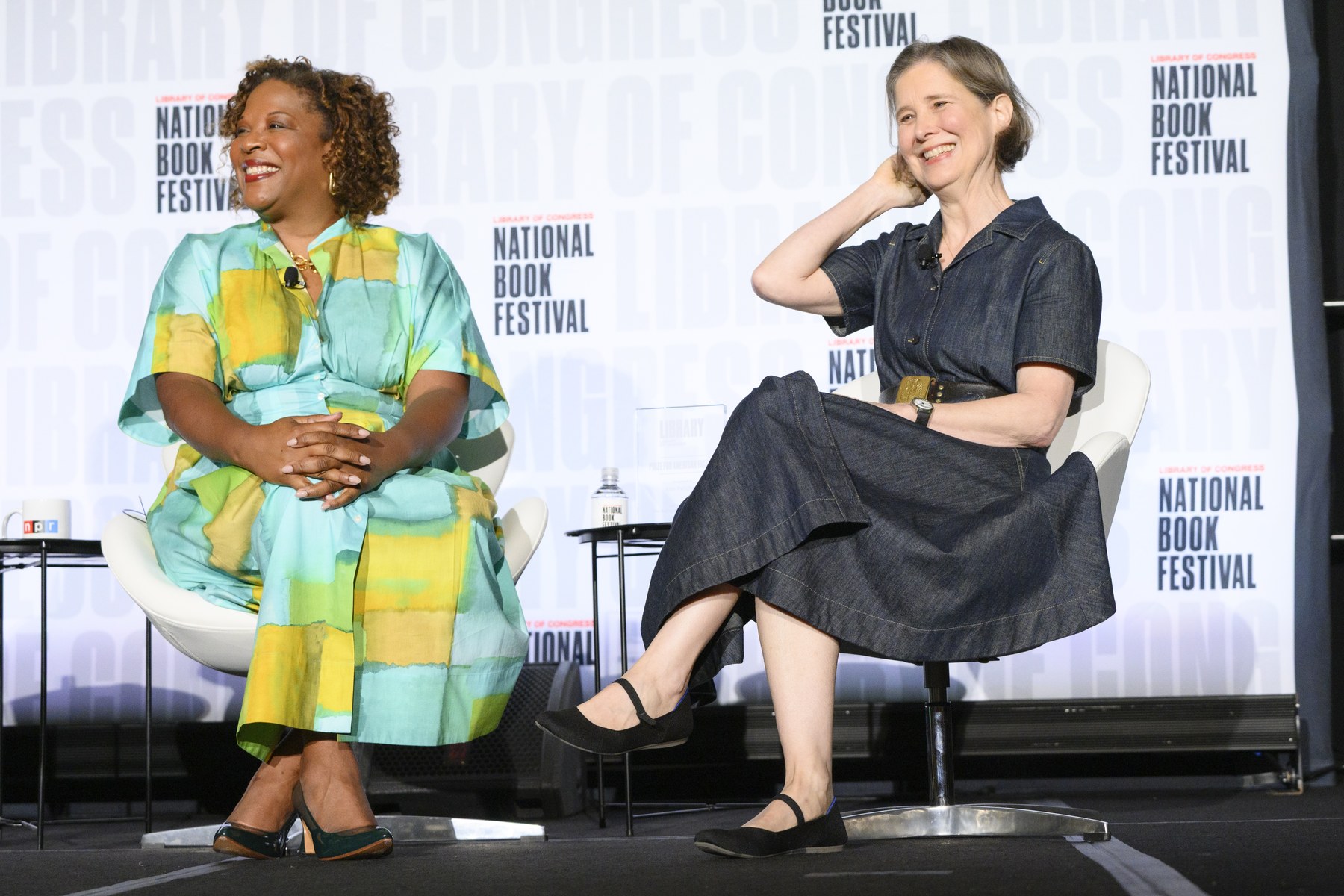
The prize was followed by a 45-minute conversation with her friend Tayari Jones, the author of An American Marriage, moderated by NPR’s Mary Louise Kelly. Both writers had new books to talk about, and both had a dead one behind it. Jones spent years on an idea before admitting, as she put it, that “the novel wasn’t noveling.” She went back to a pencil and a spiral notebook, and out came Kin.
Patchett spent more than a year on a sequel of sorts to Tom Lake, and even skipped a trip to Paris with her husband to stay home and wrestle with it. She knew something was wrong, she said, when she started putting the hand mixer in the refrigerator. She compared the whole thing to a relationship that is not going to make it, a long spell of “living in the fog.” Then one morning she woke up and thought, “This book isn’t going to work.” Far from being devastated, she said, it felt like walking out of the fog. The book she wrote next was Whistler, the story of a grown woman’s chance reunion with her long-lost former stepfather, and it went to No. 1 on the New York Times list.
A word from the desk
There is something rather cheering about a writer this decorated admitting that a whole year’s work went nowhere. If you have never read her, Bel Canto is still the place to begin, and Whistler makes a very good case that she has plenty left to give.
News Editorial Desk, Pine Tree Shilling Publishing