
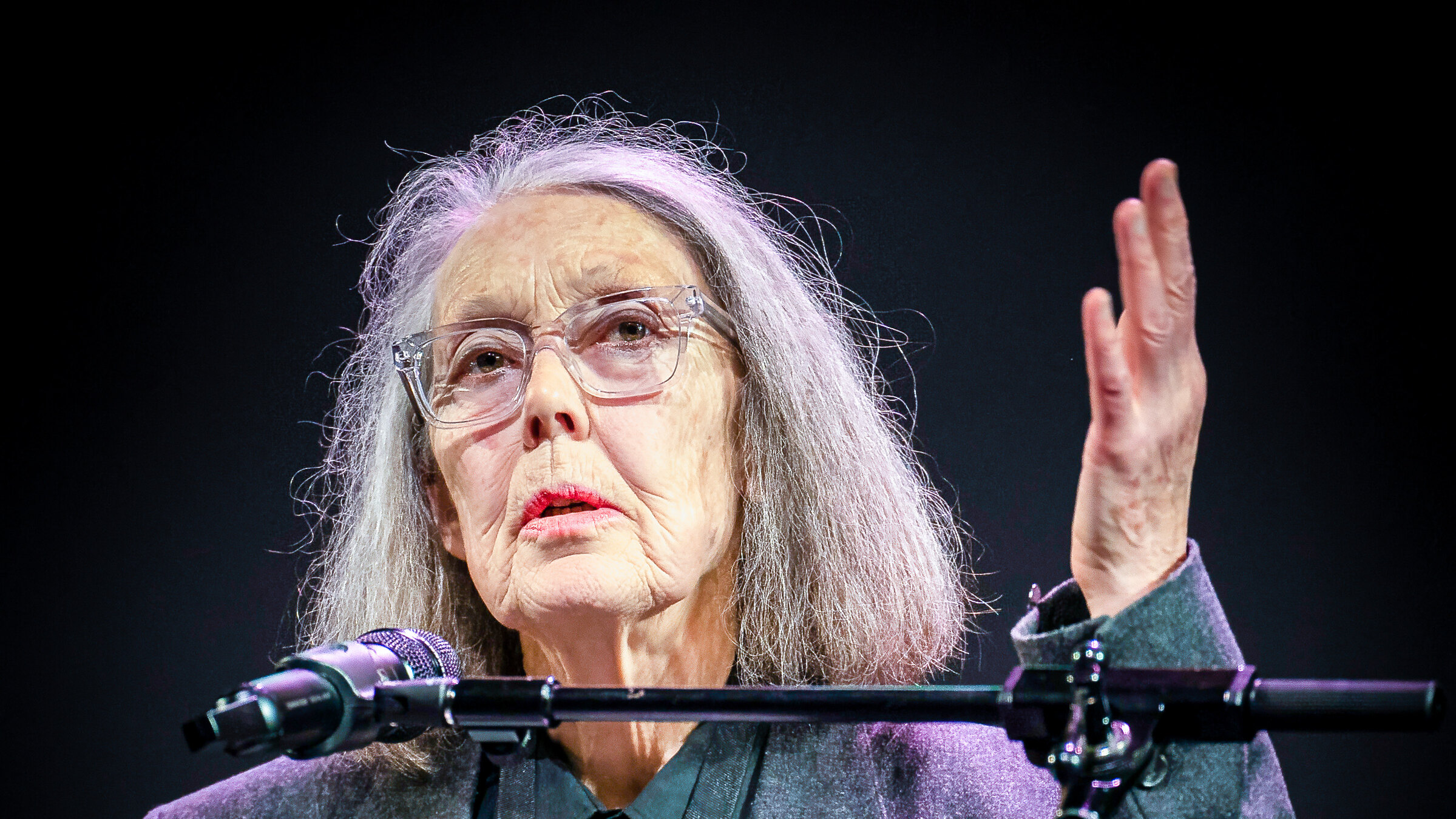
Some laureates spend Nobel morning beside the telephone, waiting. Anne Carson spent hers in Iceland with a cup of tea, a plate of crackers and the London Review of Books, and then she noticed that the floor needed sweeping. When the Swedish Academy kept calling, she let it ring. According to the University of Toronto, it was her husband, the artist Robert Currie, who persuaded her to ring back.
On Thursday, October 8, the Academy announced that the 2026 Nobel Prize in Literature had gone to Carson, now 76, “for her bold and inventive oeuvre that, in playful dialogue with the classical tradition, has created new forms for contemporary literature.”
Her verdict on the news was very much her own. “It seems a little insane,” she told the Nobel Prize’s own interviewer shortly after the announcement. “I think you’re all insane.” Standing on a windy roadside and holding her cap on with one hand, she told the Icelandic broadcaster RÚV that the main change would be practical: “I’ll get a sticker on the front of my books.”
A scholar who wrote her way out of the library
Carson was born in Toronto in 1950 and took three degrees at the University of Toronto, finishing with a doctoral thesis in Classics in 1981. For most of her working life she has taught at universities while writing poems, essays and translations, often at the same time and frequently in the same book.
That habit of mixing things is the heart of the matter. In its biobibliography of the new laureate, the Nobel Committee notes that Carson has called the etymology of words the starting point of everything she writes. It describes her Greek translations as “independent works in their own right.”
Readers who know her name usually know one book first. It is often Autobiography of Red (1998), a novel in verse that takes a few surviving fragments by the ancient Greek poet Stesichoros about Geryon, a winged red monster slain by Heracles, and turns him into a shy, tender young man in love with the wrong person. The Committee calls it the work “often heralded as Carson’s greatest,” and it is hard to argue.
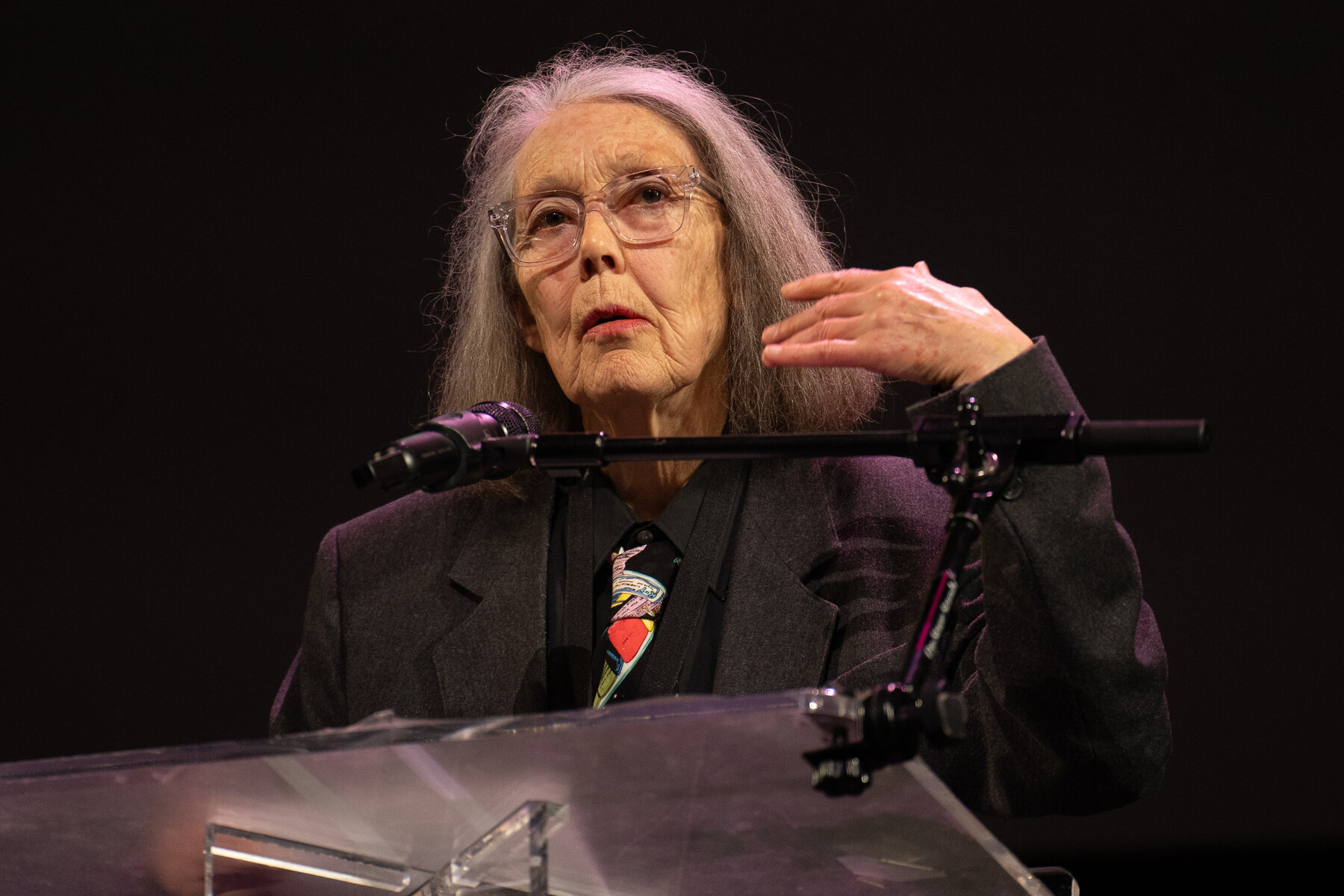
Others came to her through Eros the Bittersweet (1986), her book-length essay on desire in Greek poetry. Some found her through “The Glass Essay,” a long poem about heartbreak, a lonely mother and Emily Brontë’s moors, which appeared in Glass, Irony, and God (1995). Then there is The Beauty of the Husband (2001), a marriage told in 29 tangos, and If Not, Winter (2002), her translation of the fragments of Sappho. Many readers still keep that one by the bed.
Her most unusual object may be Nox (2010), an elegy for her brother Michael, who had drifted out of her life before he died in Denmark in 2000. It is published as a box, with a single sheet folded like an accordion and filled with photographs, letters and her own translation of the Roman poet Catullus mourning his brother. Float (2016) followed as 22 separate chapbooks, which can be read in any order. Her most recent collection, Wrong Norma, came out in 2024.
“I’ll get a sticker on the front of my books”
What the prize means for Canada
Carson is the first Canadian laureate since Alice Munro in 2013 and the second Canadian woman ever to win. By the University of Toronto’s count, she is the 19th woman among the 123 literature laureates since 1901. Prime Minister Mark Carney called her win “an extraordinary achievement and a proud moment for Canada.”
The prize carries 12 million Swedish kronor, about $1.2 million, along with a gold medal and a diploma. Carson will receive them at the ceremony in Stockholm on December 10. She has already given the money some thought, though not in the usual way. “We’re just thinking of ways to give the money away,” she told the Nobel interviewer, mentioning a friend who needs a house and a long-standing habit of giving to Doctors Without Borders.
A word from the desk
For anyone who has never read her and doesn’t know where to begin, she gave the Nobel interviewer the same advice she gives aspiring writers: start in the middle. We would add only that Autobiography of Red is a very good middle.
News Editorial Desk, Pine Tree Shilling Publishing