
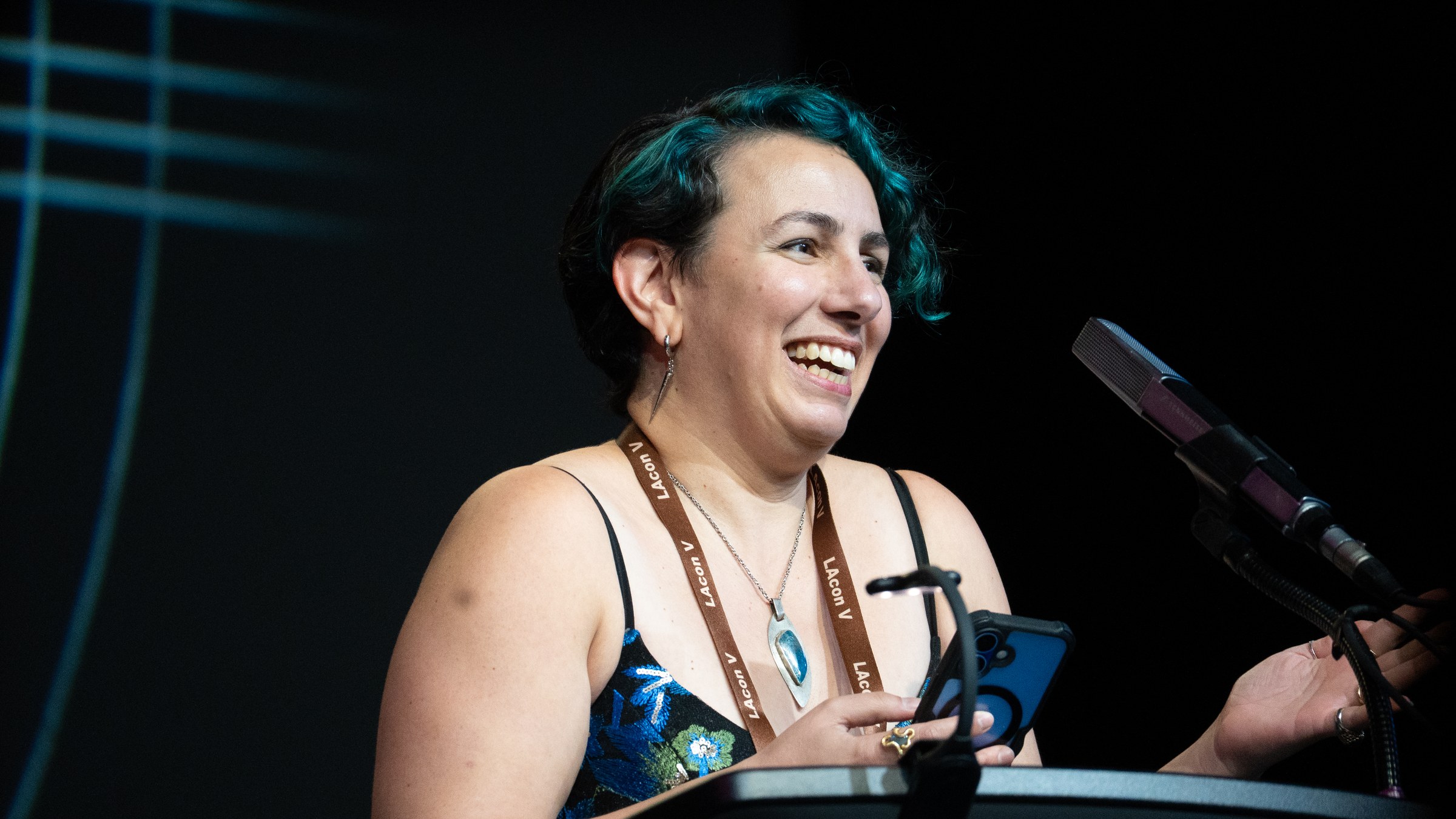
Science fiction has two great prizes, and they are chosen by two quite different crowds. The Nebulas are voted on by professional writers, the Hugos by the fans. This year the two agreed on one book above all. On Sunday night in Anaheim, Amal El-Mohtar won the Hugo for best novella with The River Has Roots, three months after the same book took the Nebula in Chicago.
The Hugos were presented at LAcon V, the 84th World Science Fiction Convention, in the arena of the Anaheim Convention Center, with the cartoonist and author Ursula Vernon as host. A total of 2,492 members sent in final ballots. The prize for best novel went to Alix E. Harrow for The Everlasting, ahead of Robert Jackson Bennett, Antonia Hodgson, Nnedi Okorafor, Adrian Tchaikovsky and Emily Tesh. Hodgson did not leave empty-handed, as she won the Astounding Award for best new writer.
Sisters, willows and a murder ballad
The River Has Roots is a short book, about 20,000 words, and it is El-Mohtar’s first solo work of fiction at any length. The Canadian writer was already a Hugo winner, for a short story in 2017 and as co-author, with Max Gladstone, of This Is How You Lose the Time War. Her new novella is set in Thistleford, a town on the edge of Faerie, where the Hawthorn family sings to the magic willows on the banks of the River Liss. Two sisters, Esther and Ysabel, love each other completely, until a rejected suitor pushes Esther into the river. Anyone who knows the old ballad of “The Two Sisters” will know roughly where this is heading. El-Mohtar, happily, has other ideas.
Harrow’s The Everlasting is a much bigger beast. A war veteran turned historian is sent back in time to make sure a legendary lady knight lives and dies exactly as the story says, for the good of the nation. He falls in love with her instead. It is a novel about how countries invent their heroes, and it had already won the Locus Award for best fantasy novel.
“The River Liss runs north to south, and its waters brim with grammar”
The writers’ choice
The Nebula for best novel went elsewhere, to Stephen Graham Jones for The Buffalo Hunter Hunter, a horror novel set in Montana in 1912. A Lutheran pastor records the confessions of a Blackfeet man named Good Stab, who has been alive far longer than he should be, and who has come to settle an old account going back to the Marias Massacre of 1870. The ceremony was held on June 6 at the Science Fiction and Fantasy Writers Association’s conference near O’Hare. N. K. Jemisin was named the 42nd Grand Master, and Tananarive Due was the host.

El-Mohtar was not the only one to collect both prizes. Thomas Ha won the Hugo for best short story with “In My Country” and the Nebula for best novelette with “Uncertain Sons.” Both juries also chose the Apple TV series Murderbot, adapted from Martha Wells’s novellas, and the video game Clair Obscur: Expedition 33. Among the other Hugo winners were John Scalzi for his Old Man’s War series, Ada Palmer’s Inventing the Renaissance and Ryan Coogler’s film Sinners. Fred Fordham also won, for his graphic novel version of Ursula K. Le Guin’s A Wizard of Earthsea.
A word from the desk
When the writers and the fans agree, it is usually worth listening. The River Has Roots can be read in an evening, so there is really no excuse. We would start there, and save The Everlasting for a long weekend.
News Editorial Desk, Pine Tree Shilling Publishing