
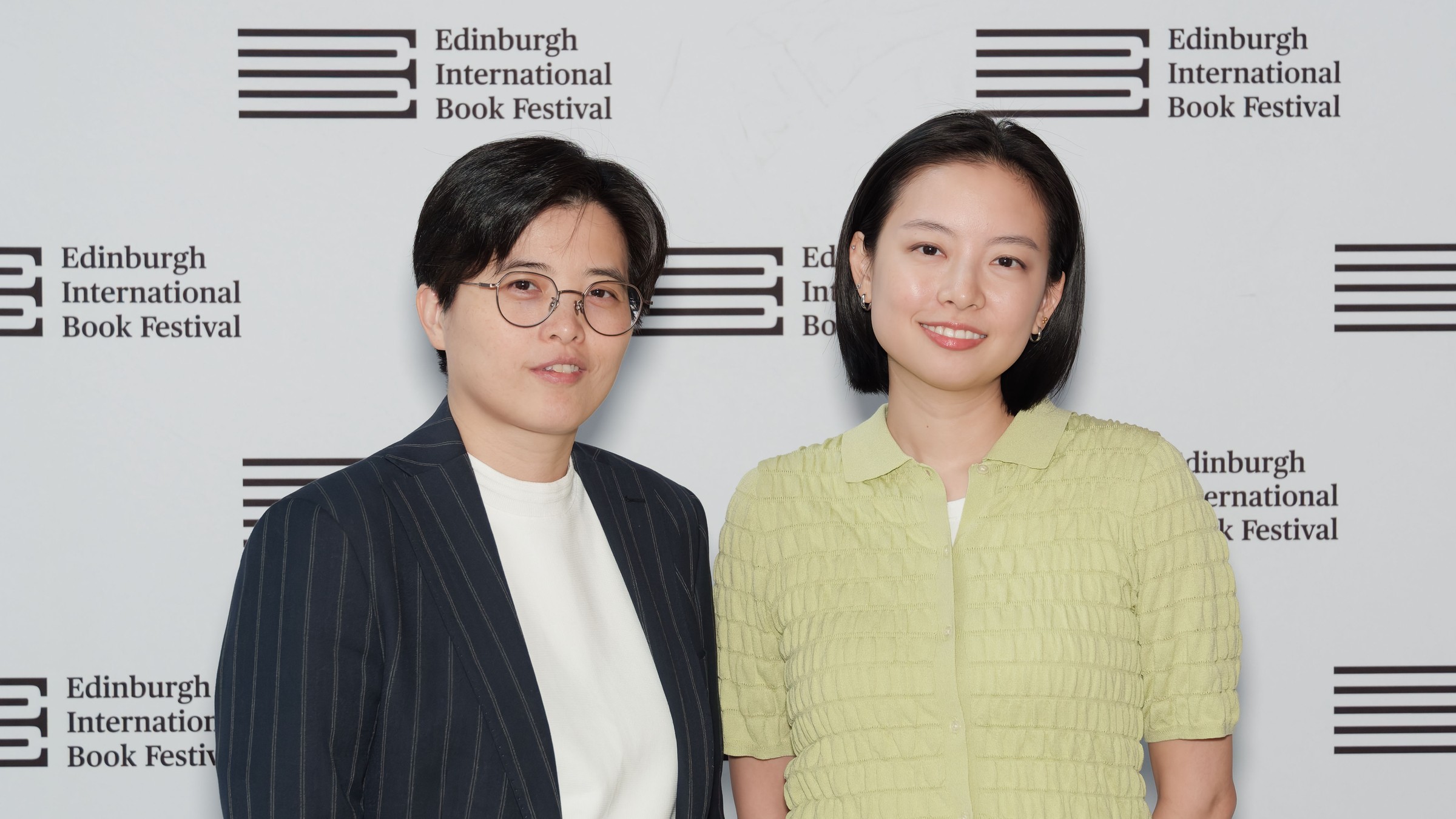
When Taiwan Travelogue first appeared in Taiwan in 2020, a good many readers believed they were holding a genuine historical document: the lost memoir of a Japanese novelist who toured the island in 1938, rediscovered and translated by one Yáng Shuāng-zǐ. There was no memoir, and no Japanese novelist. On Tuesday, May 19, in the Turbine Hall at Tate Modern, the hoax that was never quite a hoax won the International Booker Prize.
It is the first book translated from Mandarin Chinese to take the prize. Yáng is the first Taiwanese author to win it, and her translator, Lin King, the first Taiwanese American translator. The £50,000 is shared equally between them, as the rules require.
A food tour with a hidden heart
The story follows Aoyama, a Japanese writer with what the publishers call a “monstrous appetite,” on a government-sponsored tour of colonial Taiwan. Her interpreter is a young Taiwanese woman, Chizuru, who shares her passion for food and keeps everything else firmly to herself. Somewhere between one meal and the next, something rather like love begins, and so does the problem of who holds the power in it.
Natasha Brown, who chaired the judges, put the question neatly. “Can love overcome a power imbalance?” she asked, and went on to praise a novel that “succeeds as both a romance and an incisive postcolonial novel.” Her final verdict: “a captivating, slyly sophisticated novel.”
A name that means twins
There is a second story inside the first. Shuāng-zǐ means “twins.” The author was born Yáng Jo-tzu, and she and her twin sister, Yáng Jo-hui, began writing historical fiction together under the shared name in 2014, one sister handling the plot and the other the history. Jo-hui died of cancer in 2015. Her sister kept the name, and kept writing, and Taiwan Travelogue is dedicated to her.
Yáng is frank about what she was trying to do. Korea and Taiwan were both Japanese colonies, she has said, yet Taiwanese people look back on that period “with a much more conflicted mix of distaste and nostalgia.” She wanted to untangle it. She was also frank about the cost of the research into food and travel: “my savings went down; my weight went up.”
“There was still humour, good food, movies, school, petty fights, and romance. To suggest otherwise is to reduce a culture to its trauma”
The translator’s turn
Lin King’s English version is no ordinary translation, because the book is pretending to be one already. She added her own footnotes to the footnotes of the fictional translator, and critics have compared the result to a set of nesting dolls. King says she and her editor at Graywolf, Yuka Igarashi, took “a maximalist approach” and “broke countless translation ‘rules.’” The same translation won the National Book Award for Translated Literature in 2024. In Britain it is published by And Other Stories, the independent press in Sheffield.
The shortlist was a strong one, with Daniel Kehlmann, Marie NDiaye and Ana Paula Maia among the names. Sharp-eyed readers may note that Shida Bazyar was also on it, for The Nights Are Quiet in Tehran. Five months later she won the German Book Prize, but that is a story for another day.
A word from the desk
We are rather fond of a prize that hands half its money to the translator, and this year it chose a book that makes the translator part of the plot. If you have only ever read Taiwan in the news pages, here is a far better introduction: funny, hungry, and quietly heartbreaking.
News Editorial Desk, Pine Tree Shilling Publishing