
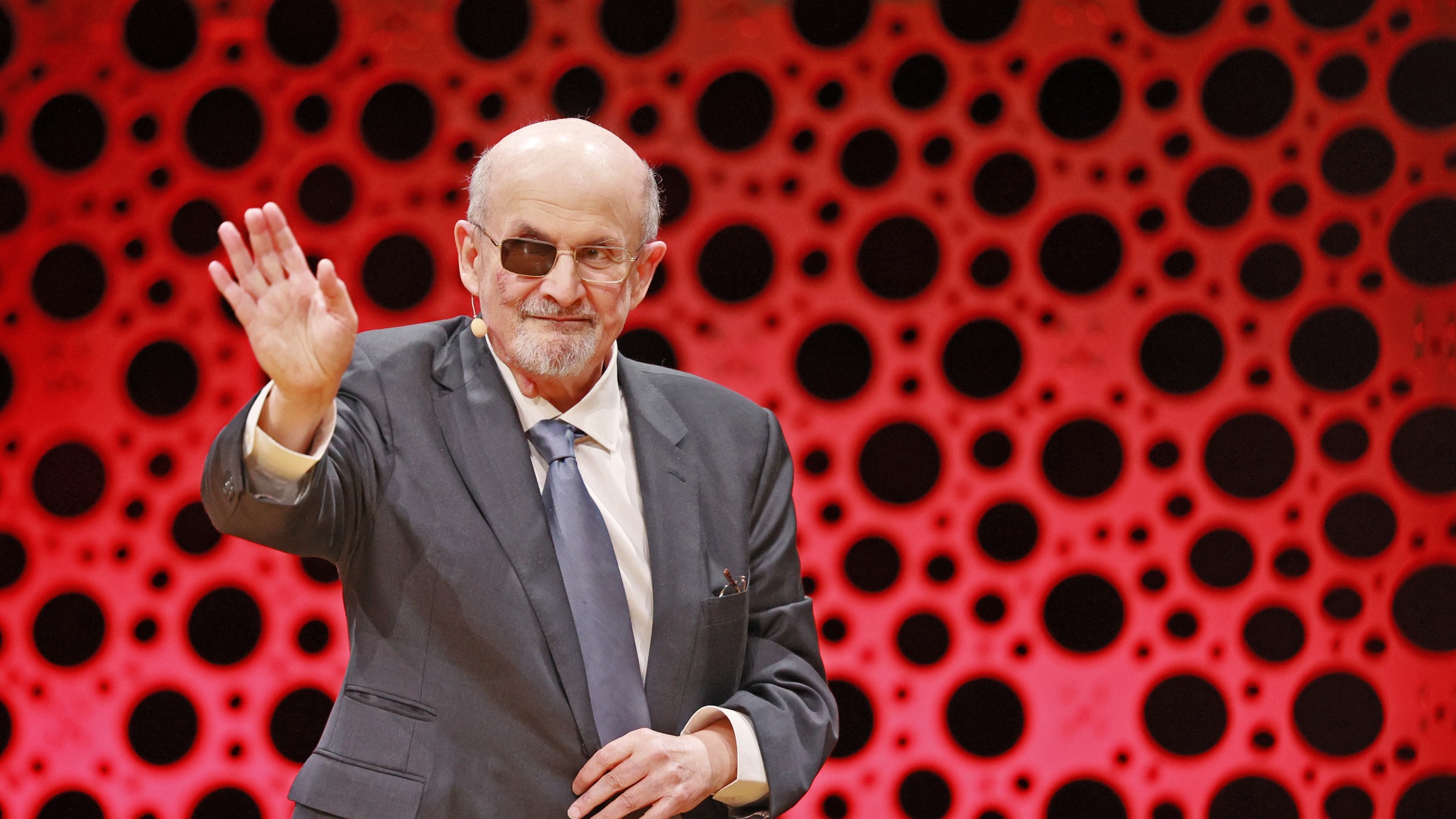
Salman Rushdie has collected a good many honors in his time, from the Booker Prize in 1981 to a knighthood in 2007. This one, he suggests, means something rather different. On Thursday, September 10, the National Book Foundation announced that Rushdie will receive its 2026 Medal for Distinguished Contribution to American Letters, the Foundation’s lifetime achievement award, at the National Book Awards in New York on November 18.
Rushdie was born in Bombay in 1947, went to school in England in his teens, and has lived in New York for many years. He became an American citizen a decade ago. Speaking to the Associated Press, he compared the medal to that moment. Citizenship, he said, gave him “a sense of being part of it” that was deeper than before, “and I think there’s something similar about this.” He remembered Raymond Carver once describing himself, after a major American award, as being “out there in literature now,” and thought, “Maybe I’m out there in American literature now.”
A short and distinguished list
The medal was created in 1988, and Rushdie is its 39th recipient. Toni Morrison, Ursula K. Le Guin, Robert A. Caro and Barbara Kingsolver have all received it; George Saunders was last year’s. According to the AP, Rushdie is only the fourth to be born outside the United States, after Saul Bellow, Isabel Allende and Art Spiegelman. The medal comes with $10,000, and it is, the Foundation notes, made of solid brass.
David Steinberger, who chairs the Foundation’s board, called Rushdie “a bold, innovative writer and an indefatigable defender of free speech.” Both halves of that are earned. Rushdie has published fifteen novels, among them Midnight’s Children, Shame, The Satanic Verses and Victory City. He was president of PEN America from 2004 to 2006, and in 2005 he helped to found the PEN World Voices Festival, which still brings writers from around the world to New York.
“Maybe I’m out there in American literature now”
After the attack
The darker chapter needs no retelling at length. In 2022 Rushdie was stabbed repeatedly on stage at a literary festival in western New York. He survived, lost the sight of one eye, and wrote Knife: Meditations After an Attempted Murder, which was a National Book Award finalist in 2024. That was, remarkably, his only competitive nomination, as his earlier books came out before he was eligible. The story collection The Eleventh Hour followed, and this autumn brought Alex Gibney’s documentary of the same name as the memoir.
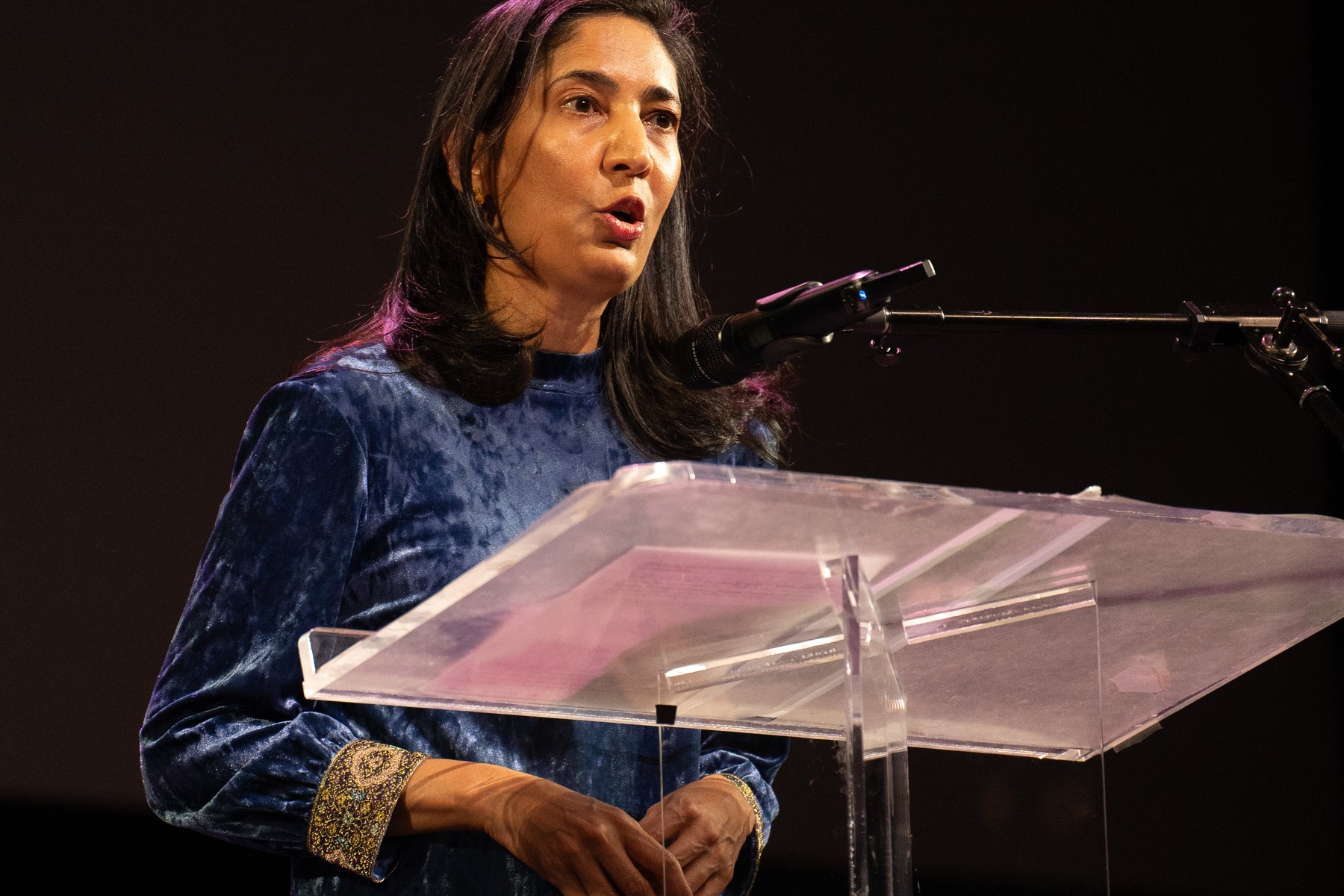
The medal will be presented by Kiran Desai, a longtime friend and herself a Booker winner, who read on Rushdie’s behalf at the finalist reading two years ago. Asked about his legacy, Rushdie said he would like to leave behind a shelf of books with his own name on it. He sees himself as a writer of cities, of Bombay, London and New York in turn, and of a long tradition of immigrant writers in America. “I was an immigrant writer in England,” he told the AP, “and now I’m an immigrant writer in America.”
A word from the desk
For a man who spent years being told where he could not go, there is something fitting in being told, finally, where he belongs. We cannot think of a better hand to pass him the medal than Desai’s.
News Editorial Desk, Pine Tree Shilling Publishing