
For almost fifty years Michele Mari kept well away from literary prizes, which he said were not for him. On Wednesday night he finally gave in, and the Strega Prize, Italy’s grandest, gave in right back. His novel “I convitati di pietra” (“The Stone Guests”, published by Einaudi) won the 80th edition with 190 votes, well clear of Matteo Nucci, whose “Platone. Una storia d’amore” took 152.
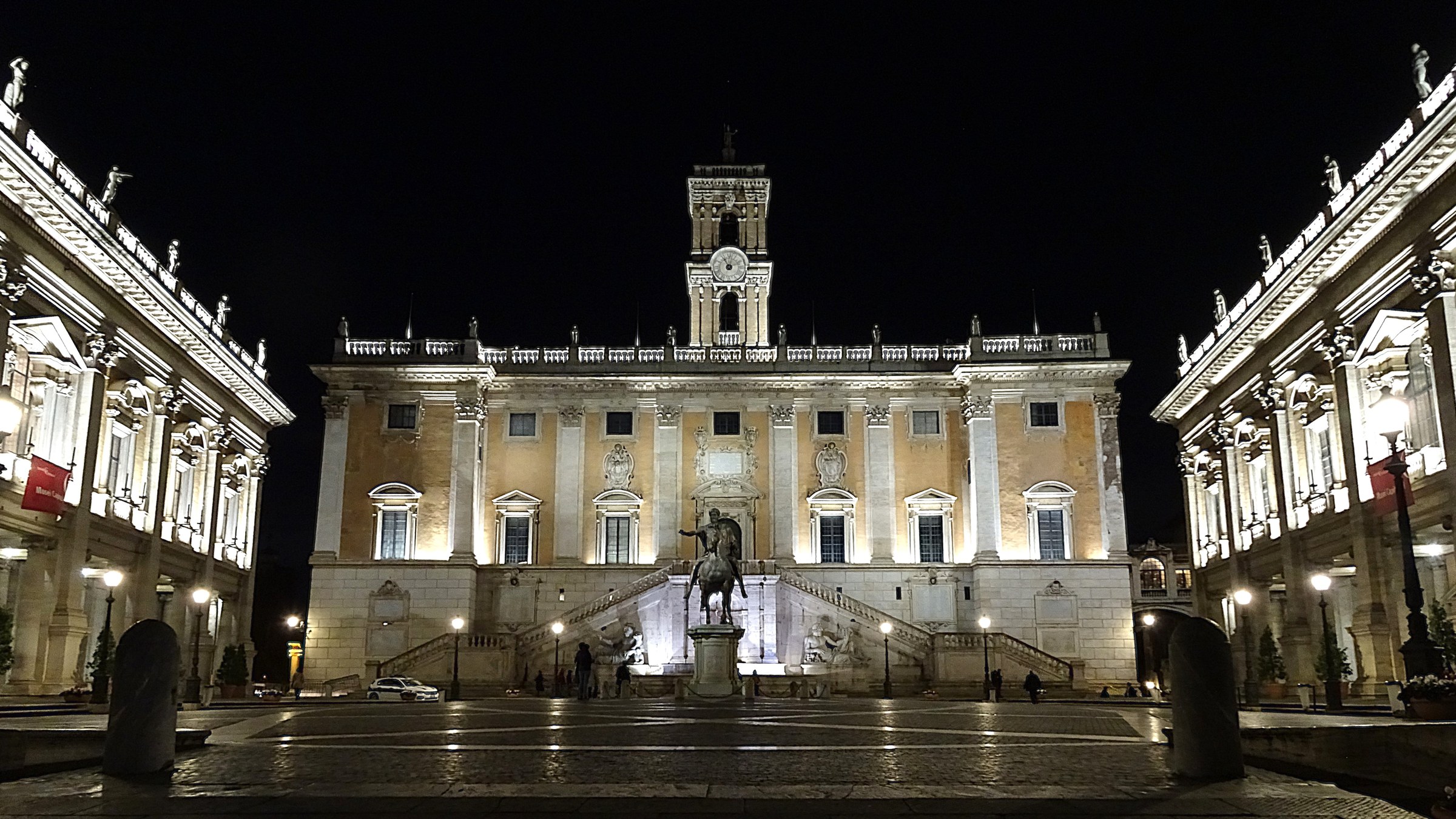
To mark the anniversary, the final was moved from its usual home in the gardens of Villa Giulia to Piazza del Campidoglio, Michelangelo’s square on the Capitoline Hill. The last hundred votes were read out one by one, broadcast live on Rai 3, and Andrea Bajani, last year’s winner, announced the result. Mari, visibly moved, called his wife and children up to the stage. He opened his speech by warning the audience that he does not know how to laugh, so any attempt would come out as a grimace, and then thanked his readers, “those who supported me and also those who didn’t.”
A pact among classmates
The novel is a black comedy. A group of boys from Milan’s Liceo Berchet, where Mari went to school himself, finish their final exams in 1974 and make a pact. They will meet for dinner every year and pay into a common fund, and the last three still alive will share it. What begins as a schoolboy lark turns, over the decades, into a lottery of mortality, in which every funeral moves someone up the table. The story runs all the way to 2050.
It was already a winner before Rome. About six weeks earlier it took the Strega Giovani, voted for by secondary school students, which is a rather lovely result for a book about old men waiting for each other to die. Behind Mari and Nucci came Bianca Pitzorno, Alcide Pierantozzi, Teresa Ciabatti and Elena Rui. In all, 643 of the 800 eligible jurors voted.

A prickly run-up
The weeks before the final were not entirely peaceful. During the Strega Tour, the series of readings that takes the finalists around Italy, Mari was reported to have made unkind remarks about Michela Murgia, the much-loved writer who died in 2023, in a private exchange with Ciabatti. He denied speaking about Murgia’s appearance and said he had already apologized to Ciabatti in private. On the night, Ciabatti paid a warm tribute to Murgia from the stage, and Mari himself called the tour “rather demanding, to use a euphemism.”
“Those who supported me and also those who didn’t”
Mari was born in Milan in 1955, the son of the designer Enzo Mari, and taught Italian literature at the University of Milan for many years. He is a philologist, a poet and a great lover of comics and science fiction, and his books are full of ghosts, monsters and the leftovers of childhood. English readers can find him already: “Verdigris”, translated by Brian Robert Moore for And Other Stories, won the PEN Translation Prize in 2025.
A word from the desk
There is something rather satisfying about a writer who avoids the prize circuit for half a century, enters once and wins. Mari said afterward that this is not the best of his books, which is exactly the sort of thing the best writers say. Now we wait, with some impatience, to read the stone guests in English.
News Editorial Desk, Pine Tree Shilling Publishing