

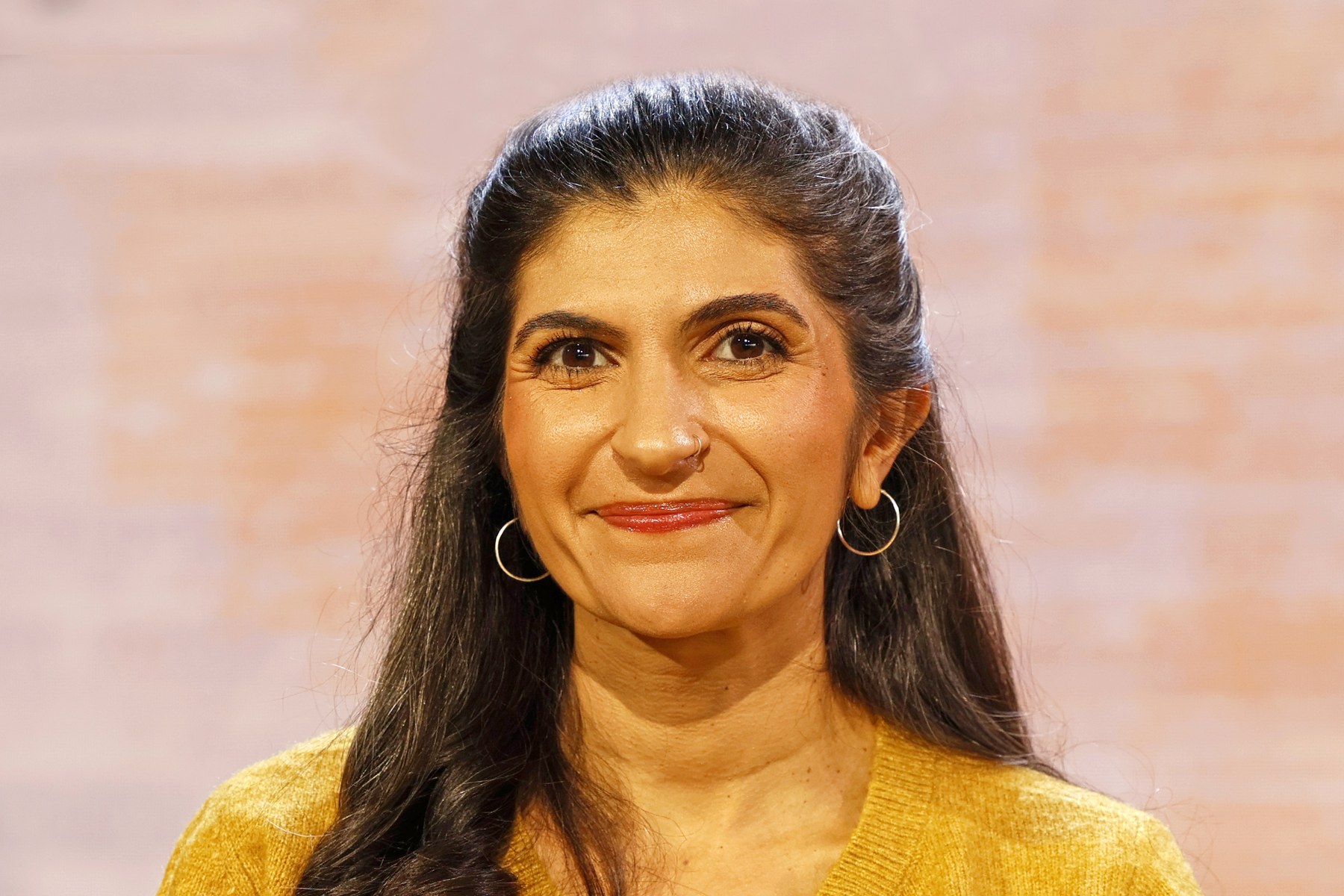
The German Book Prize has a habit of going to the novel everyone talks about, and this year it went to the one everyone expected. On Monday evening, in the Kaisersaal of Frankfurt’s old city hall, Shida Bazyar was named the winner for “Die Lücken”, which translates as “The Gaps” or, in the prize’s own English, “Omissions”. She takes home €25,000, and each of the five other shortlisted writers receives €2,500.
Bazyar was born in 1988 in Hermeskeil, in the Rhineland-Palatinate, a year after her parents fled Iran. Her debut, “Nachts ist es leise in Teheran”, came out in 2016, and her second novel, “Drei Kameradinnen”, made the longlist for this same prize in 2021. This time she went all the way.
A village that kept quiet
The novel is set in Heimesbach, a made-up village in the Hunsrück hills, closely modeled on Hermeskeil. The story begins with the local Nazis of the 1930s and the Jewish families who lost everything, moves through the profiteers who reinvented themselves after the war as innocent bystanders, and arrives decades later with two families fleeing the revolution in Iran, who have no idea what their new home is built on.
It is told by a dead narrator, a woman killed in a traffic accident who returns to the village where she arrived as a ten-year-old refugee and reports what she sees to her sister. Bazyar has said the book began with a local history by Heinz Ganz-Ohlig, which recorded the names of the 21 Jewish residents of Hermeskeil who were murdered. The result runs to 512 pages and was published by Kiepenheuer & Witsch in September.
“A novel that stands against indifference”
What the jury saw
The seven judges, led by Cornelia Geißler of the Berliner Zeitung, read 205 novels before cutting them to a longlist of 20 in August and a shortlist of six in September. In their citation they wrote that there were neighbors who watched as Jewish people vanished from the streets, and there are neighbors today who decide whether people with a migrant background feel at home. They praised the dead narrator and the “kaleidoscopic structure,” which lets the book move freely between the decades, and called it “a novel that stands against indifference.”
Bazyar herself was composed, and her speech was not a cheerful one. Joy, she said, would have felt out of place for a book about people who were persecuted and killed. She spoke briefly about the present mood in Germany and borrowed a line from Hannah Arendt, that the problem was not what one’s enemies did in 1933 but what one’s friends did. The other five on the shortlist were Franziska Gänsler, Valeria Gordeev, Elias Hirschl, Peggy Mädler and Dana Vowinckel.
A word from the desk
The ceremony is always held on the eve of the book fair, and so Bazyar spent the following week in Frankfurt as the most sought-after author in the building. In November she collects the Wilhelm Raabe Prize for the same book. There is no English translation yet, but we would be surprised if one were far away.
News Editorial Desk, Pine Tree Shilling Publishing